
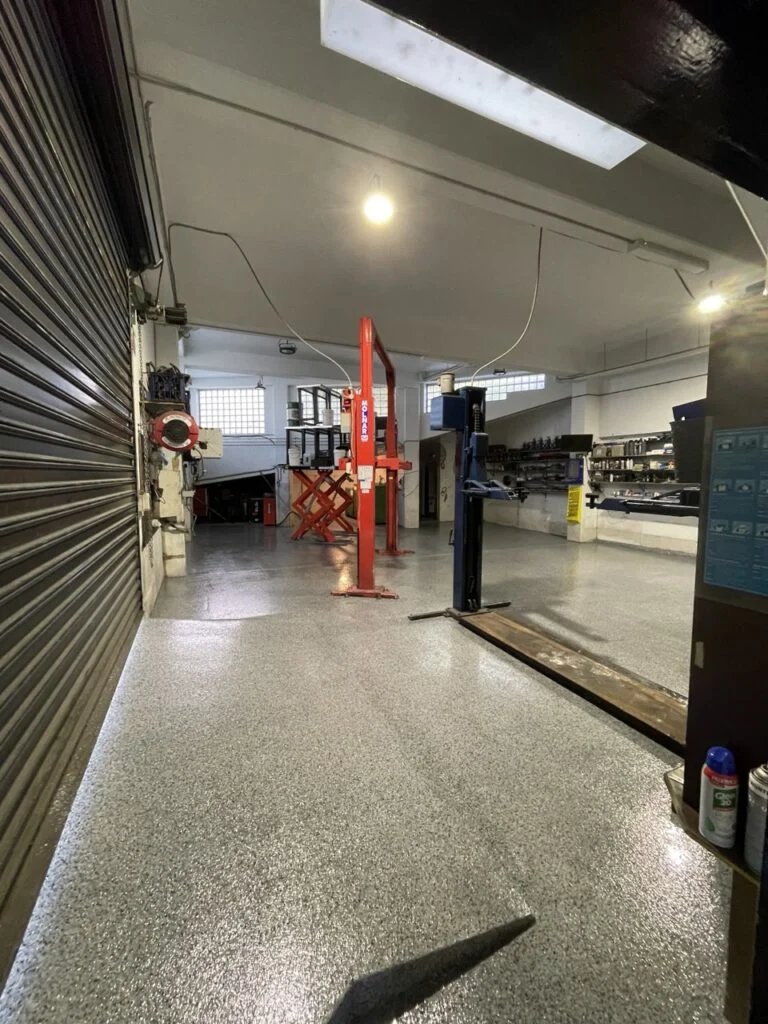
If you run a workshop in Melbourne — automotive, mechanical, fabrication, or general trade — your floor takes a beating most people never think about. Dropped tools, oil leaks, hot tyre marks, forklift traffic, degreasers splashed across the same six square metres every single day. Bare concrete simply isn’t built for that kind of punishment, and it shows: dusting, staining, cracking, and a floor that looks tired within a year or two.
This guide covers what workshop epoxy flooring actually involves, why it holds up where concrete doesn’t, what it costs, and what to check before you commit to an installer.
Why Bare Concrete Fails in a Working Workshop
Concrete is porous. That’s the core problem. Oil, brake fluid, coolant and degreasers all soak straight into untreated concrete, leaving stains that no amount of scrubbing lifts back out. Over time, the surface starts to dust — that fine grey powder that ends up on everything from your tools to your stock — because the top layer of the slab is slowly breaking down under constant traffic and chemical exposure.
None of that happens by accident. It’s what concrete does under sustained mechanical and chemical load without a protective layer on top.
What Epoxy Flooring Actually Solves
A properly installed epoxy system seals that porous surface into one continuous, non-porous layer. There’s nowhere for oil or chemicals to soak in, no joints for grime to collect in, and no dusting because the slab underneath is no longer exposed. For a Melbourne workshop epoxy flooring installation, that translates into a few very practical wins:
- Chemical resistance — oil, fuel, brake fluid and solvents sit on the surface instead of soaking in, so a wipe-down actually works
- Impact and abrasion resistance — dropped tools, wheeled trolleys and dragged equipment won’t chip or gouge the surface the way they will on raw concrete
- Anti-fatigue underfoot — a real benefit if your team is standing on the same section of floor for hours at a time
- Slip resistance — additives can be worked into the topcoat to meet the AS 4586 slip resistance standard, particularly important around wash bays or anywhere oil regularly hits the floor
- A finished, professional look — not the deciding factor for most workshops, but it matters more than people expect once clients or inspectors are walking through
Is Workshop Flooring Different to Warehouse or Kitchen Systems?
Yes — and this is where a lot of quotes go wrong. A workshop floor deals with a different combination of stress to a warehouse or a commercial kitchen, so the system needs to be specified accordingly.
Warehouses are mostly about sustained point-load from racking and constant forklift traffic — you can read more on that in our warehouse epoxy flooring page. Kitchens are about heat, grease and food-safety compliance. Workshops sit in their own category: heavy chemical exposure, dropped tools and hardware, hot components, and often a wash bay or pit involved somewhere in the layout. A generic “one system fits all” coating tends to underperform in at least one of these areas — usually chemical resistance or impact strength.
How Long Does Installation Take?
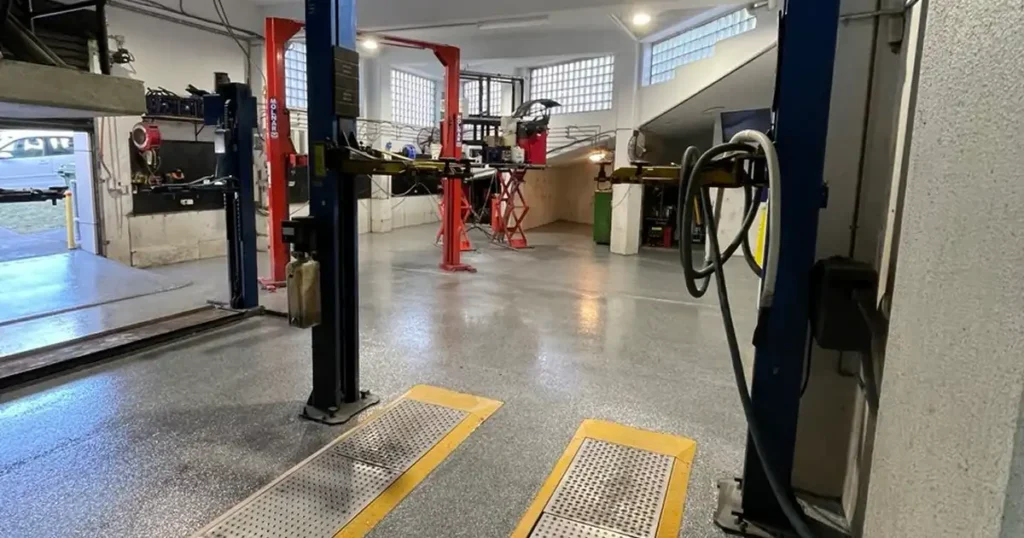
Most single-bay to mid-size workshop floors are completed in 1–3 days, following the same process we cover in more depth in our heavy-duty epoxy flooring guide: surface grinding and prep, crack and joint repair, primer, build coats, then the topcoat with any anti-slip additive worked in. Fast-curing systems mean light foot traffic is usually fine within 24 hours, with the floor fully load-rated for vehicles and equipment within 48 hours — which matters if you can’t afford to shut the workshop down for a week.
How Much Does Workshop Epoxy Flooring Cost in Melbourne?
Cost depends on three things: the size of the space, the condition of the existing slab, and the system specified. A workshop with heavy oil staining or existing cracking needs more prep work than a newer, cleaner slab, which affects price. The honest answer is that there’s no reliable ballpark figure without seeing the floor — which is exactly why a free on-site assessment is worth doing before you compare quotes on price alone, since two quotes for “the same size floor” can specify completely different systems underneath.
Keeping a Workshop Floor in Good Condition
Epoxy flooring is low-maintenance, not no-maintenance. A regular sweep and occasional degreaser wash is usually all it takes to keep a workshop floor performing the way it did on day one — our full epoxy floor maintenance guide covers this in detail, including what to avoid so you don’t dull the finish early.
What to Check Before You Commit to an Installer
- Ask what system they’re specifying and why — a workshop with a wash bay needs a different spec to a dry storage-and-repair space
- Confirm the prep process — grinding and proper crack repair matter more to longevity than the topcoat itself
- Check the warranty covers delamination and bubbling under normal workshop use, not just general wear
- Get a fixed price, not an estimate that can shift once the job starts
FAQs - on Epoxy Flooring in Melbourne
Can epoxy flooring handle a workshop with a wash bay or pit?
Yes, with the right system specified. Wash bay areas need a higher slip-resistance rating and stronger chemical resistance than the rest of the workshop floor, so this should be discussed and priced separately during your quote.
Will epoxy crack if I drop something heavy on it?
A properly installed, industrial-grade system is built to handle dropped tools and equipment without cracking or chipping. Cracking is far more likely to come from an underlying slab issue that wasn’t addressed during prep than from the epoxy itself.
How long will a workshop epoxy floor last?
With proper installation and reasonable maintenance, a commercial-grade workshop floor typically lasts 10+ years, even under daily oil exposure, foot traffic and dropped tools.
Do I need to close the workshop during installation?
For most jobs, yes, for the 1–3 days of installation — but fast-curing systems get you back to light use within 24 hours and full operation within 48, which is usually far less disruptive than businesses expect going in.
Planning a Kitchen Floor Upgrade?
Free on-site assessment across Melbourne & Victoria · Fixed-price quote within 24 hours