
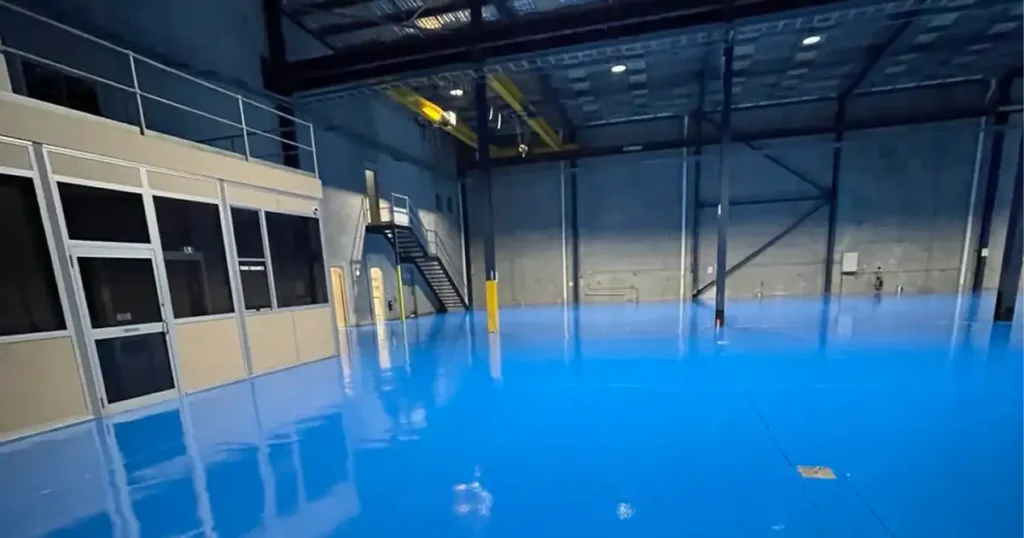
People walk across warehouse floors all the time without thinking much about what’s under their feet. Spend a morning in one, though, and the floor starts revealing things you normally miss, the uneven hum of a forklift, a pallet dragged a bit too fast, a spot on the concrete that looks slightly different than it did last week. You start noticing how much work a surface does without anyone giving it a second glance.
That’s where the whole topic of industrial flooring options for warehouses comes from. It’s not some trend or checklist. It’s the simple fact that a floor can make the day run smoother or slowly wear everyone down if it isn’t chosen with care.
From the time I’ve spent around the crew at Melbourne Epoxy Floor, I’ve learned that the smallest details tend to decide everything. This guide follows that idea, no polish, no dramatic promises, just the kind of observations that come from being around real warehouses and watching what holds up.
What Are Most Warehouse Floors Made Of?
When you step into a warehouse, the floor rarely stands out right away. Give it a moment, though, and you start noticing what it’s made of and how much it quietly carries throughout the day.
Most places stick to materials that don’t complain under heavy loads and won’t fall apart after a few rough seasons. You’ll see a few common surfaces in most facilities:
- Basic concrete, the kind that feels tough, plain, and dependable without trying to impress anyone.
- Polished concrete, used in spaces where dust becomes a daily nuisance and crews want something easier to keep clean.
- Sealed concrete, which holds up a bit better against spills and sudden temperature changes.
- And sometimes coated concrete, especially in sections with constant forklift traffic.
Anyone digging into industrial flooring options for warehouses eventually notices the same pattern: most warehouse floors start with concrete in one shape or another, shaped by whatever the building needs to survive its routine.
What Flooring Is Used in Warehouses?
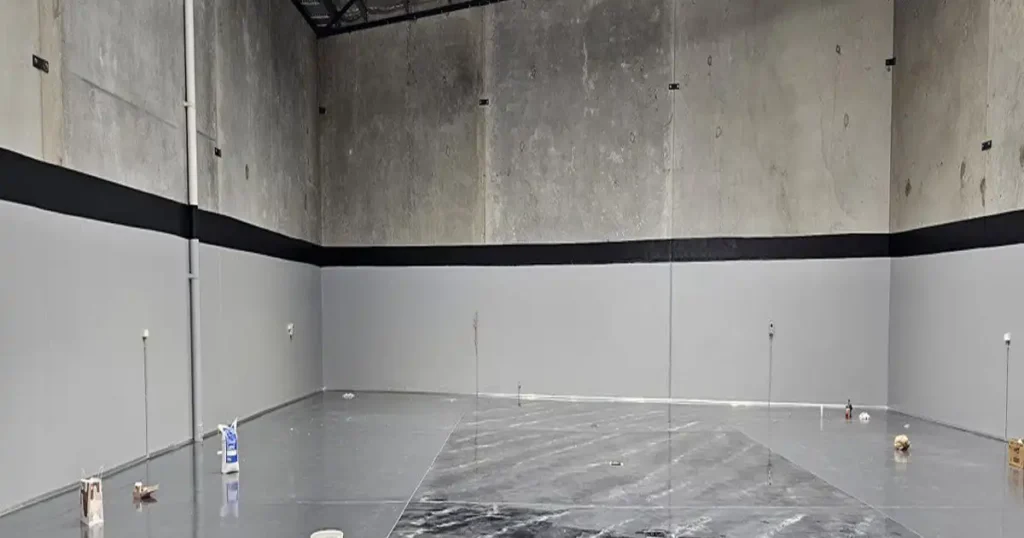
A warehouse floor is its own kind of story. Every scuff mark, every stain, every worn path near the loading dock tells you what that space endures day after day. So what do people actually put down to handle it all?
The choices are more interesting than you might think. We’re talking about a tight group of specialized materials, each with a very specific job. You’ve got the thick, liquid epoxy armor, transforms the concrete into a seamless, chemical-proof shell that cleans up with a mop. Incredible for places like food processing. But it needs a flawless foundation to stick to, or you’ll have problems.
Then there’s tough vinyl sheeting, which brings a bit of give and fights static electricity, a lifesaver in electronics warehouses. Polished concrete offers a sleek, modern look and kills dust, but that shine can turn treacherous when wet. And for the spots that take a real beating, industrial mortars are troweled on like a new, sacrificial skin.
Sorting through these industrial flooring options for warehouses means listening to your own operation’s story. It’s about finding the material that fits your plot. That’s the work we do at Melbourne Epoxy Floor: reading the wear patterns, understanding the pressure points, and suggesting a floor that won’t just survive, but actually makes the workday feel a little smoother.
What Is the Best Material for a Warehouse?
Forget a single “best” material for warehouse flooring. That answer doesn’t exist. The real question is: what’s the perfect response to your specific chaos? Your daily grind, the loads, the spills, the traffic, dictates the choice.
It’s all about matching a material’s personality to your pressure points. Consider your champion based on your battle:
- War on germs and chemicals? A seamless epoxy/polyurethane coating is your impervious shield. Demands perfect installation, but wins on cleanability.
- Static electricity a nightmare? Conductive vinyl is your mandatory, non-negotiable defense.
- Zone of pure physical impact? Industrial mortar toppings are your thick, sacrificial armor.
- Need robust and budget-conscious? Densified, sealed concrete is your reliable workhorse.
Navigating industrial flooring options for warehouses is honest trade-offs, not magic. The best material fades into the background, simply working so you don’t have to think about it.
What Is the Best Flooring for Factories?
Figuring out the best floor for your factory? Yeah, it’s a headache. You’ve got machinery grinding all day, stuff getting dropped, chemicals dripping, it’s a war zone down there.
Pick wrong, and you’ll be fixing cracks and dealing with dust forever. It’s worth getting right the first time.
Concrete: The Old Reliable
Let’s be real, most places just go with concrete. It’s there, it’s cheap, and it can take a hit. But after a few years, that bare concrete starts to look pretty sad. It cracks, it powders up, and suddenly you’re breathing in dust. A good hardener or sealant can save you a ton of trouble later on.
Why Epoxy Feels Like a Secret Weapon
This is where it gets interesting. Epoxy isn’t just a coating; it’s like putting a superhero suit on your concrete. You get this slick, seamless surface that laughs at oil spills and doesn’t flinch when you drop a tool.
Cleaning is a breeze, a quick mop and it looks brand new. For a seriously pro job, the folks at Melbourne Epoxy Floor know how to make it bulletproof.
So, How Do You Choose?
Don’t just pick the shiniest option. You gotta think about your own mess. Is it grease? Heavy pallets? Constant foot traffic? It’s smart to sit down and compare all the different industrial flooring options for warehouses.
Sometimes spending a bit more now means you can forget about the floor for the next decade. In the end, you want something you don’t have to think about every day.
Is Epoxy Flooring Good for a Warehouse?

So, epoxy for a warehouse… people ask us about it a lot, usually while pointing at a floor that’s been through a rough week. And, look, the honest answer?
Most of the time it does the job really well. Not because it’s fancy or anything, but because it behaves the same way every day, even when the warehouse doesn’t.
Picture a normal shift, forklifts dragging a bit, someone drops a box they shouldn’t have, a spill nobody admits to. Epoxy doesn’t get annoyed. It forms this hard, tight layer over the concrete, almost like a skin.
Liquids just sit there until someone gets around to wiping them. Cleaning feels less like a chore and more like “okay, fine, this is easy.”
The strength is what people usually notice first. It doesn’t flake or turn dusty the way raw concrete sometimes does. If you add a bit of texture to it, the floor grips better under work boots, which makes everyone breathe easier.
When I’ve compared materials across all these industrial flooring options for warehouses, epoxy keeps showing up as the one that causes the least trouble.
Not perfect, nothing is, but it holds up, and that counts for a lot in spaces where the floor never gets a day off.
Is Epoxy Flooring Suitable for Storage Warehouse Areas?
You know, we get asked about epoxy for warehouses all the time. After installing it in so many spaces, we can say it’s often a fantastic fit. But we always tell people, you’ve got to know what you’re signing up for. It fixes a ton of common problems, sure, but if you skip the details, it might hand you a few new ones.
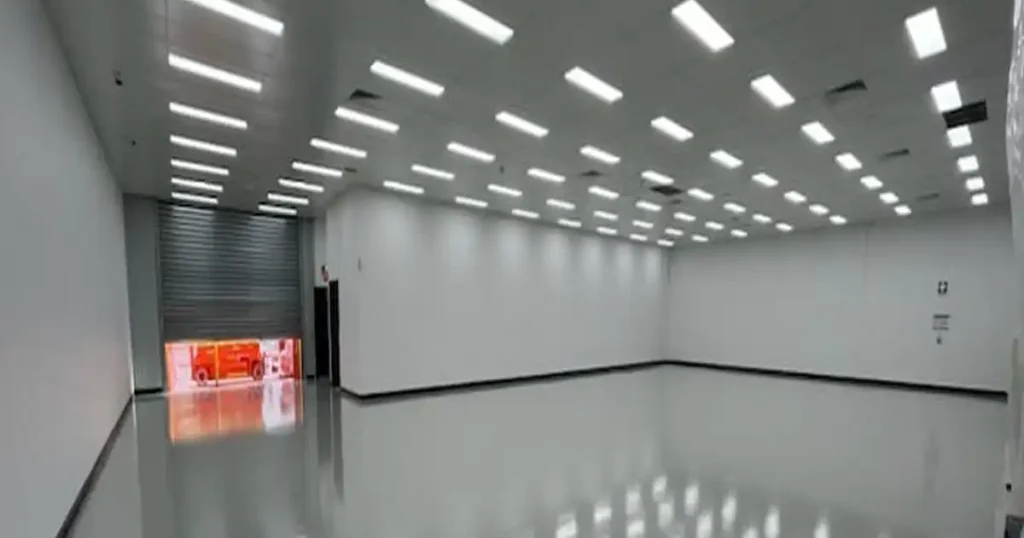
Advantages of Epoxy Flooring for Warehouse
If you’re worn out from dealing with concrete dust, cracks that keep coming back, and those small safety issues that never seem to end, you’re in good company.
Plenty of warehouse managers hit that same wall, and many of them eventually try epoxy because they want a floor that behaves better in real, messy conditions, not something that needs constant attention. Here’s what usually stands out:
- Cleanup feels easier. Spills sit on the surface instead of soaking in, so mopping doesn’t turn into a whole project.
- Toughness you can feel. It holds up against pallet drag, dropped tools, and chemical splashes without breaking down.
- Better traction. A bit of texture added during installation makes busy areas safer for everyone.
- Long-term value. You stop paying for endless patchwork and resurfacing.
Getting the right installer matters. Melbourne Epoxy Floor knows how to prep and apply the coating properly. For honest advice or a clear quote, call 00000000.
Disadvantage of Epoxy Flooring for Warehouse
Yeah, epoxy looks great in pictures, clean and super tough. But on a real, working warehouse floor? It has some flaws you can’t ignore.
The biggest headache is the downtime. It needs days to cure properly, so your operations come to a complete stop. That glossy finish is also a slip hazard the moment oil or water hits it. And despite its strength, dropping the same heavy item repeatedly can cause chips and cracks that are a pain to fix properly.
If you’re set on it, working with true specialists makes all the difference. A team like Melbourne Epoxy Floor knows how to prep the surface correctly and choose the right finish to minimise these issues.
They’ll give you the honest pros and cons for your specific space, so you’re not caught off guard. When comparing industrial flooring options for warehouses, just go in with your eyes open.