
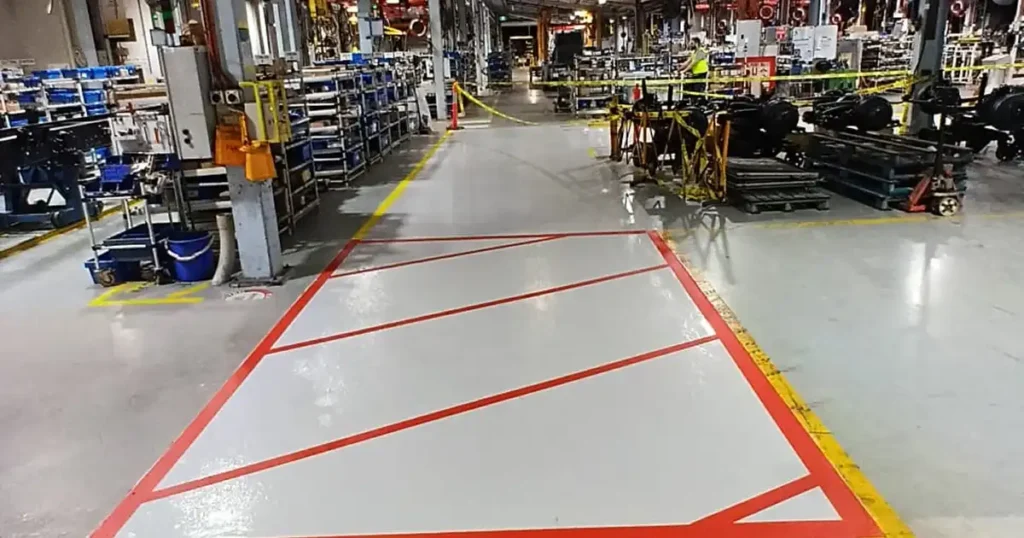
Planning an industrial project involves putting emphasis on material cost. Epoxy flooring makes for one important investment in the durability, safety, and efficiency of your operation.
To accurately budget, one must understand the variables. How much does an industrial epoxy floor cost, and what impacts its price?
Factors Influencing the Cost of Industrial Epoxy Flooring in Melbourne
When it comes to industrial epoxy flooring, the cost can vary significantly based on several key factors. The choices you make at the outset of your project will have a direct impact on both the upfront costs and the long-term value of your flooring.
Each industrial space is unique, and the specific needs of your facility will dictate the final cost.
1. Size of the Area
The size of the area you’re looking to cover with epoxy flooring is one of the most straightforward factors influencing cost. Larger areas typically require more materials and labor, which will naturally increase the overall expense.
However, there can be economies of scale that might reduce the cost per square foot for bigger projects. For your project, understanding the dimensions and layout of your space will allow you to estimate material needs and labor costs accurately.
2. Floor Prep:
The “prep on the floor is gonna be a very big indication of what the price is gonna be.”
- Examples: Do you need to grind the floor? Do you have to remove an existing coating?
3. Coating Complexity
The number and type of layers affect the price:
Examples: Are you putting on a primer? How many top coats? Are you putting down flakes (full or partial)? Are you using quartz or doing a metallic floor?
4. Type of Epoxy Used
The type of epoxy you choose for your flooring will play a major role in determining the cost. Different epoxies come with different price points and performance characteristics, so it’s important to choose the one that best suits your industrial needs.
For example, 100% solid epoxy offers the highest durability but comes at a higher cost compared to water-based or solvent-based options. Your choice should be guided by the specific demands of your facility.
Factors such as chemical exposure, foot traffic, and the need for special features like anti-slip surfaces will influence which type of epoxy is right for you.
5. Thickness and Layers
The thickness of the epoxy layer and the number of coats applied will also affect the cost. Thicker applications typically provide better durability and protection, which is essential in high-traffic or heavy-duty industrial environments.
However, they require more material and labor, which increases the price. When considering thickness, think about the long-term benefits and how they align with your operational needs.
A thicker epoxy might cost more initially, but it can offer greater protection and longevity, potentially saving you money on maintenance and repairs down the line.
6. Customization Options
Customization allows you to tailor the epoxy floor to meet specific functional and aesthetic needs, but it can also add to the cost. Whether you’re looking for a particular color, pattern, or texture, these custom features require additional materials and labor.
Your facility may benefit from customizations that enhance safety, efficiency, or even branding. While these options can increase the initial investment, they might offer significant advantages in terms of functionality and the overall environment of your industrial space.
7. Application Method
The method used to apply the epoxy can vary, and this can influence both the cost and the quality of the final product. Self-leveling epoxy, for example, provides a smooth and durable finish but can be more expensive due to the precision required in its application.
Different methods offer different benefits, and selecting the one that aligns with your facility’s requirements will help ensure you get the best value for your investment.
8. Labor and Installation Costs
Finally, the cost of labor and installation is a significant factor in the overall price of your epoxy flooring. Experienced contractors who specialize in industrial epoxy applications may charge more, but their expertise can ensure a higher-quality installation that lasts longer.
You want to work with professionals who understand the unique challenges of industrial settings. Investing in skilled labor might increase upfront costs, but it can save you time and money in the long run by reducing the likelihood of errors or the need for repairs.
Trust, Expertise, and Realistic Warranties
This focuses on hiring the right professional and managing expectations regarding floor lifespan and guarantees.
- Hiring Advice: The key is to “feel comfortable with who you’re using” and “pick their brain” about their capabilities.
- Cost of Expertise: The price pays for “expert people to come out and install your floor with the proper products.”
- Warranty Myth: Beware of companies offering a “10-year warranty” or “lifetime warranty.”
- Wear and Tear: Warranties typically do not cover “wear and tear” from daily driving in and out.
- Failure Exemptions: Issues like delamination due to moisture or expansion are likely deemed a failure of the concrete/substrate, not the product application, and will not be warrantied.
- Realistic Lifespan: A good epoxy floor should last “five to seven years” if you maintain the top coat.
Cost Comparisons
When you’re considering industrial epoxy flooring, it’s helpful to compare it with other flooring options to see how it measures up in terms of both cost and long-term value.
1. Epoxy vs. Other Industrial Flooring Options
When it comes to cost, epoxy flooring is competitive with other industrial flooring solutions, but it also offers unique benefits that might make it the better choice for your specific needs.
- Polished Concrete
This is often seen as a less expensive alternative, with costs typically ranging from $3 to $7 per square foot. While polished concrete offers a sleek finish and is relatively durable, it may not provide the same level of chemical resistance or ease of maintenance as epoxy.
Over time, this could lead to higher costs in terms of repairs and upkeep.
- Vinyl Composite Tile (VCT)
VCT is another cost-effective option, usually priced between $2 to $5 per square foot. However, VCT often requires regular maintenance, such as waxing and stripping, which can add to your long-term costs.
While it’s a good choice for areas with lighter foot traffic, it might not hold up as well as epoxy in heavy-duty industrial settings.
- Polyurethane Flooring
Polyurethane can be more expensive, ranging from $5 to $12 per square foot. It offers excellent flexibility and is resistant to thermal shock, making it a strong contender in environments with extreme temperature changes.
2. Short-Term vs. Long-Term Costs
While initial costs are important, considering the long-term expenses of your flooring choice can give you a more complete picture of its value. Epoxy flooring may have a higher upfront cost compared to some alternatives, but its durability and low maintenance needs often result in lower total costs over time.
- Maintenance Costs
Epoxy floors are known for being easy to maintain, typically requiring only regular cleaning. In contrast, VCT may need periodic stripping and waxing, which could add several thousand dollars annually to your maintenance budget.
- Durability and Longevity
With proper installation, epoxy floors can last 10-20 years or more in industrial environments, reducing the need for frequent repairs or replacements. Polished concrete, while durable, might require more frequent repairs, especially in areas with heavy machinery or chemical exposure.
Over time, these repairs can add up, making epoxy a more cost-effective option.
For instance, if you expect to operate in the same facility for 15 years, the lower maintenance and repair costs of epoxy flooring could save you tens of thousands of dollars compared to options like VCT or polished concrete. This makes epoxy not just a short-term solution but a long-term investment in the efficiency and safety of your industrial space.