
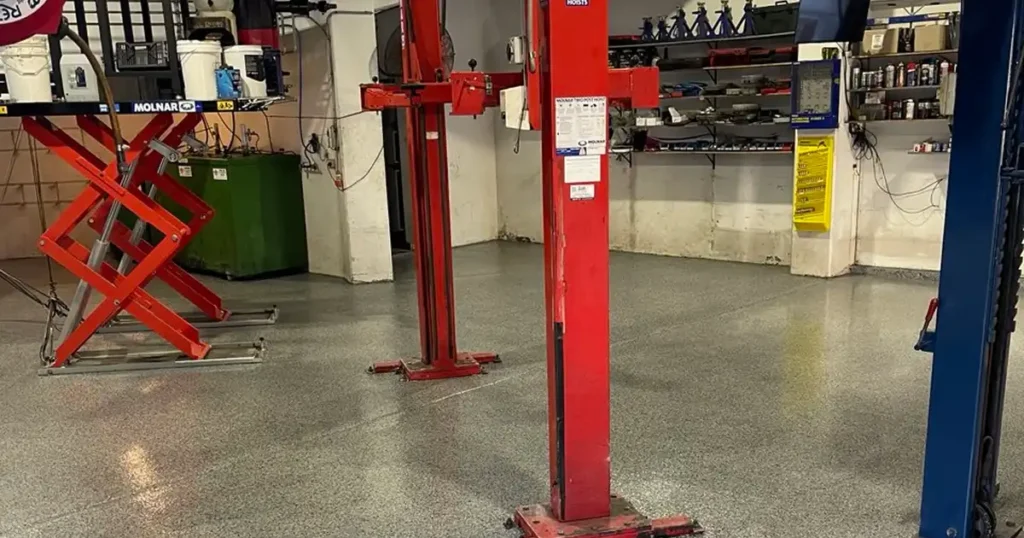
Floors are usually the last thing people think about. Until they fail. A crack here, a slippery patch there, stains that never really disappear. In industrial spaces, that small neglect turns into a big problem fast.
Equipment keeps moving, people keep working, and the floor has no choice but to take the pressure. That is where heavy-duty epoxy flooring quietly proves its value.
This guide is not theory or sales talk. It is built on real job sites, real mistakes, and real results from Melbourne Epoxy Floor, written to help you decide what actually works.
What Exactly is Heavy-Duty Epoxy Flooring?
Let’s slow it down for a second. Most people picture a shiny garage floor and assume that’s epoxy. That assumption causes a lot of bad decisions.
In an industrial setting, heavy-duty epoxy flooring is something else entirely. It’s a thick, rigid layer that chemically bonds with concrete and becomes part of it.
Forklifts roll over it all day. Acids spill. Heat builds up. The surface doesn’t flinch. Instead of protecting the concrete, it replaces its weakness with strength.
The Difference Between Residential and Industrial-Grade Resin
Here’s where many projects go wrong. Residential epoxy is made to look clean and feel smooth under shoes. Industrial resin doesn’t care about that. It’s heavier, denser, and far less forgiving during application.
In heavy-duty epoxy flooring systems, the resin penetrates and locks into the slab, then cures rock hard. Drop tools, rolling loads, constant abrasion, none of it phases the surface. Try that with a home-grade kit and it will fail fast.
Understanding High-Solids vs. Water-Based Coatings
Water-based coatings sound appealing. Low odor, easy cleanup, quick cure. But durability always pays the price. High-solids coatings behave differently.
There’s very little evaporation during curing, which means what you apply is what stays on the floor.
That matters. For heavy-duty epoxy flooring, high-solids systems create real thickness, real protection, and a lifespan measured in years, not maintenance cycles.
Top Benefits of High-Performance Industrial Floor Coatings
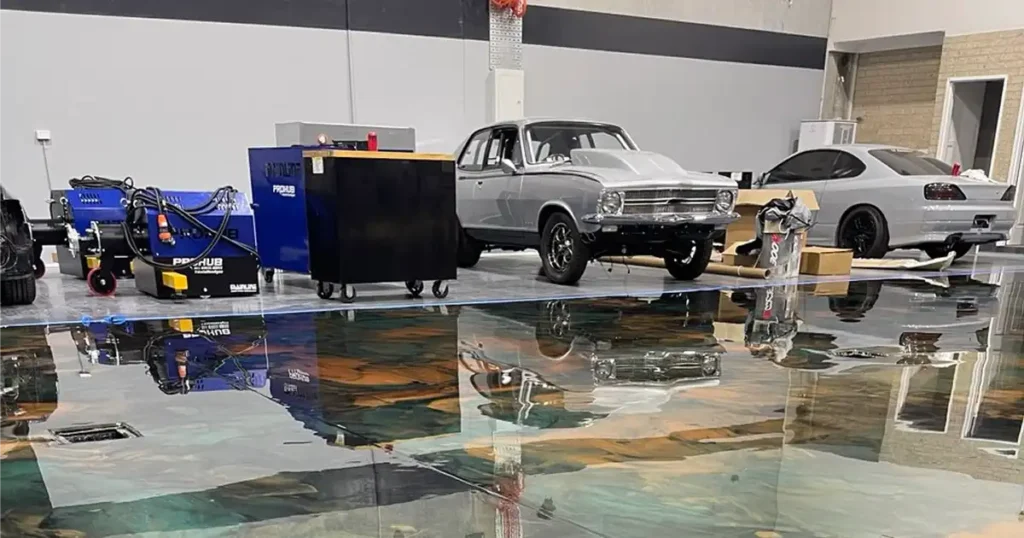
Strength is the obvious win, but it goes deeper than that. High performance coatings reduce downtime, simplify cleaning, and protect the concrete underneath.
When heavy-duty epoxy flooring is installed correctly, it turns the floor into a working surface, not a constant maintenance problem, as Melbourne Epoxy Floor often emphasizes on industrial sites.
Chemical and Spill Protection for Harsh Environments
Oil, solvents, acids, nothing stays harmless for long on bare concrete. Industrial coatings seal the surface completely, stopping absorption before damage begins.
Spills get wiped up, not soaked in. That single feature alone saves facilities thousands in repairs and contamination issues over time.
Enhancing Workplace Safety with Slip-Resistant Textures
Safety on an industrial floor isn’t solved with warning signs alone. The way the surface feels underfoot changes everything.
By adjusting texture during application, the workshop floor can grip when needed without turning into a dirt trap, even in wet or busy zones.
How long does a heavy-duty epoxy floor last?
Longevity depends on traffic, prep quality, and system choice. In real industrial use, heavy-duty epoxy flooring often performs for ten to fifteen years before major rework is needed. Regular cleaning helps, but the real lifespan is set on installation day.
Where Heavy-Duty Epoxy is Essential
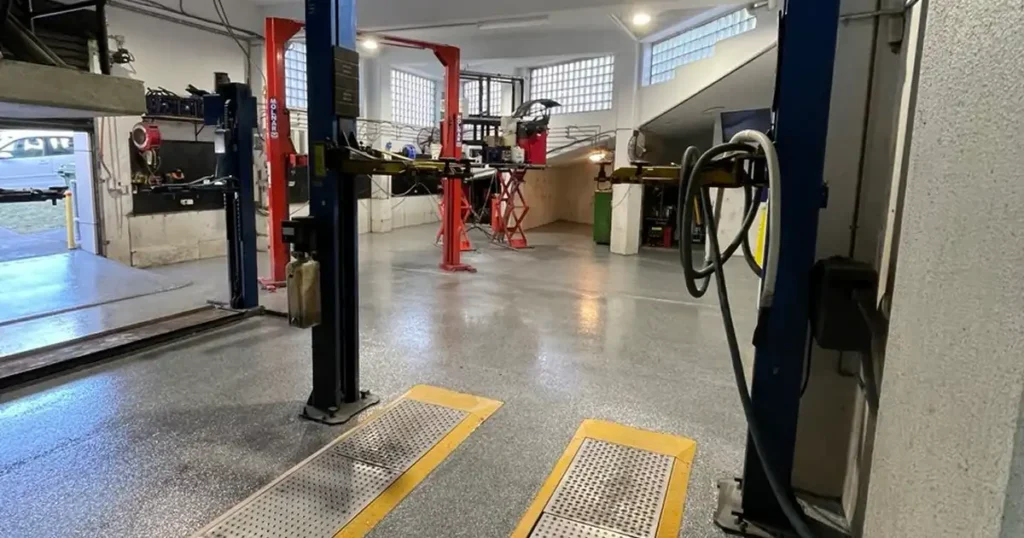
Some environments don’t get second chances with flooring. Constant motion, heavy loads, spills, heat, pressure.
In these places, heavy-duty epoxy flooring stops being an upgrade and becomes a requirement, something Melbourne Epoxy Floor sees repeatedly across demanding industrial projects.
1. Manufacturing and Production Lines
Machines vibrate. Tools drop. Oils leak without warning. Floors here must stay flat, sealed, and reliable. A weak surface disrupts workflow fast.
Production lines need coatings that hold alignment, resist chemicals, and survive nonstop use without creating dust or surface failure.
2. High-Volume Warehouses and Distribution Centers
Forklifts never rest. Pallets scrape, turn, slam down. Traffic patterns repeat thousands of times a week. Floors must endure abrasion without rutting or peeling.
In these spaces, heavy-duty epoxy flooring protects the slab while keeping movement smooth and predictable under load.
3. Automotive Service Bays and Aircraft Hangars
Fuel, hydraulic fluid, hot tires, metal parts. Everything hits the floor eventually. These environments demand chemical resistance and impact tolerance at once.
Cleanability matters too. A properly built epoxy surface handles abuse while keeping inspection zones safe, bright, and easy to maintain.
The Installation Process: Why Professional Application Matters
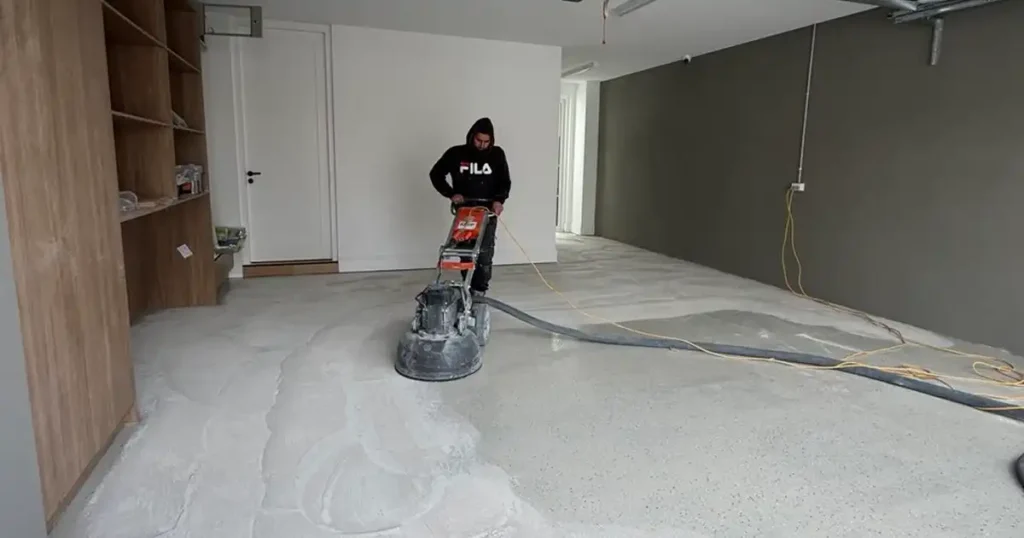
This is where most failures begin. Not with the product, but with shortcuts. Industrial floors leave no room for guesswork.
Heavy-duty epoxy flooring only performs when timing, temperature, tools, and experience come together, something Melbourne Epoxy Floor treats as non-negotiable on site.
Concrete Surface Preparation: Diamond Grinding vs. Shot Blasting
Concrete must be opened, not cleaned. Diamond grinding smooths and profiles at once, while shot blasting aggressively exposes pores.
The choice depends on slab age and contamination. Wrong prep means weak bonding, even if the coating itself is high quality.
Why Moisture Testing is Critical to Prevent Floor Failure
Concrete breathes. Moisture vapor pushes upward long after curing. Skip testing and the floor may blister months later.
Professionals measure vapor transmission first, adjust systems accordingly, and protect heavy-duty epoxy flooring from hidden pressure beneath the slab.
The Multi-Layer System: Primer, Body Coat, and Topcoat
Each layer has a job. Primer anchors, body coat absorbs abuse, topcoat seals everything in. Remove one, and performance drops fast.
This layered approach spreads stress, controls wear, and keeps the surface working long after installation ends.
Ready to Upgrade Your Industrial Facility?
For years, Melbourne Epoxy Floor has been tackling industrial floors that need more than ordinary care.
Across Melbourne and nearby regions, we’ve handled all kinds of projects, big and small. Our team? Skilled, hands-on, and focused on quality. We use only top-tier materials to make sure every heavy-duty epoxy flooring job lasts.
Curious or ready to start? Give us a call at 00000000 and let’s get your facility set up right.